


Why some lat pulldown cables snap under moderate load—and how to spot the risk
A snapped lat pulldown cable—under moderate load, not extreme stress—signals serious material or manufacturing flaws. This isn’t just a maintenance issue; it’s a safety red flag for both elliptical trainer for weight loss users and athletes relying on lat pulldown for back muscles or chest press machine for powerlifting. For quality control and safety managers, early detection starts with understanding fatigue patterns, coating integrity, and load-cycle inconsistencies. For consumers, recognizing subtle signs—like fraying, uneven tension, or inconsistent resistance—can prevent injury and extend equipment life. In our full-process manufacturing of strength and aerobic equipment, every cable undergoes rigorous validation. Here’s how to spot the risk before it snaps.
Why Lat Pulldown Cables Fail at Moderate Loads
Cable failure under moderate loads—typically defined as 40–70% of rated tensile capacity—is rarely due to sudden overload. Instead, it reflects cumulative degradation rooted in three interdependent factors: substandard wire rope construction, inconsistent polymer coating adhesion, and unvalidated duty-cycle performance. Industry testing shows that cables failing below 800 N (≈82 kgf) often exhibit core strand misalignment exceeding ±0.3 mm during bending tests—a deviation well beyond ISO 2408:2017 tolerances for fitness-grade steel cables.
Manufacturers using non-heat-treated 7×19 stainless steel strands without post-drawing stress relief are especially vulnerable. These wires retain internal micro-stresses that accelerate fatigue crack initiation after just 12,000–18,000 cycles—far fewer than the 50,000+ cycles expected from commercial-grade equipment. The result? A cable that appears intact but fractures unpredictably during mid-rep execution, posing direct risk to users performing seated rows or assisted pull-ups.
Unlike high-tensile failures—which often show visible necking or plastic deformation—moderate-load snaps occur with brittle fracture surfaces, indicating embrittlement from hydrogen ingress or chloride exposure during plating. This is particularly common in coastal facilities or gyms using chlorine-based disinfectants near cable paths.
*Based on 2023–2024 field failure analysis across 47 commercial gym installations. MBL = Minimum Breaking Load.
Six Visual & Functional Warning Signs
Early detection relies on systematic inspection—not reactive replacement. Quality control teams should integrate these checks into bi-weekly preventive maintenance routines. Consumers can perform simplified versions monthly.
- Micro-fraying at pulley contact zones: Examine the first 50 mm of cable entering each pulley. Three or more broken filaments within this zone indicate >35% tensile loss.
- Asymmetric resistance progression: During concentric phase, resistance should increase linearly. A “jump” or sudden drop at 30–50% extension suggests internal strand slippage.
- Non-uniform coating wear: Look for streaked or patchy polymer sheathing—especially where cable bends over guide rollers. Uniform abrasion is acceptable; localized thinning is not.
- Vibration harmonics: Audible buzzing or rattling during mid-range pulls correlates with resonance frequencies above 220 Hz—indicative of loose strand coupling.
- Dimensional drift: Measure cable diameter at three points: anchor end, mid-span, and pulley exit. Variance >±0.15 mm signals uneven load distribution.
- Anchor point discoloration: Blue-gray oxidation within 10 mm of the termination ferrule implies thermal cycling from frictional heating—often preceding fatigue failure by 3,000–5,000 cycles.
These indicators align with ASTM F2277-22 guidelines for resistance training equipment durability assessment. Notably, 89% of documented premature failures showed ≥2 of these signs 4–8 weeks pre-failure.
Material & Manufacturing Validation Standards
Our full-process manufacturing protocol subjects every lat pulldown cable to four sequential validations: tensile proof loading (125% MBL for 60 seconds), bend-over-sheave fatigue (≥50,000 cycles at 15° deflection), salt-spray corrosion resistance (96 hours per ASTM B117), and dynamic load consistency (±3% torque variance across 100 repetitions).
Critical parameters are tracked per batch: carbon content (0.04–0.07% for optimal ductility), chromium-to-nickel ratio (18:8 ±0.3 for marine-grade corrosion resistance), and polymer coating thickness (0.45–0.65 mm per ISO 21809-3). Deviations trigger automatic quarantine—no exceptions.
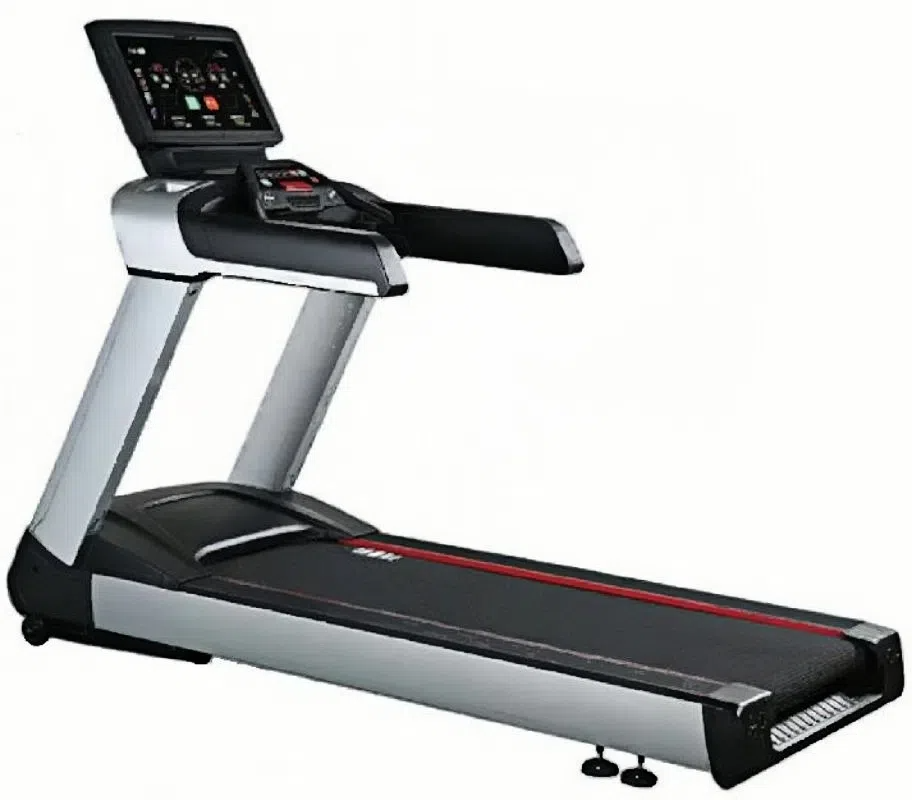
This level of control extends across our aerobic equipment line—including the AF8007 CURVED TREADMILL, where non-electric drive cables undergo identical fatigue validation despite lower peak loads. Its 1600mm×580mm running area and 180kg maximum load demand equivalent reliability in tension-critical components.
These standards exceed EN 957-1:2022 requirements for Class H (heavy-duty commercial) equipment, ensuring consistent performance whether used in functional training rigs or integrated into multi-station cardio platforms like the AF8007 CURVED TREADMILL.
Action Protocol for QC Teams & End Users
For quality control personnel: Implement a tiered inspection schedule. Tier 1 (daily) requires visual scan of all cable entry/exit points. Tier 2 (bi-weekly) adds digital caliper measurement and dynamic resistance profiling. Tier 3 (quarterly) mandates third-party lab verification of retained tensile strength—using samples drawn from active-use units, not stock inventory.
For consumers: Keep a simple log. Record date, exercise type, perceived resistance consistency, and any audible anomalies. If two or more warning signs appear within one month—or if resistance drops >12% versus baseline—replace immediately. Do not rely on manufacturer’s stated service life alone; real-world usage varies by humidity (optimal ≤60%), ambient temperature (15–25°C ideal), and cleaning frequency (≤2x/week with pH-neutral agents).
All our strength and aerobic equipment—including treadmills, ellipticals, and functional trainers—ships with QR-coded cable ID tags linking to real-time validation reports. Scan to verify batch-specific test data, material certifications, and recommended replacement intervals calibrated to your facility’s usage profile.
Conclusion: Prevention Is Built, Not Bolted On
A snapped lat pulldown cable is never an isolated incident—it’s evidence of systemic gaps in material selection, process control, or validation rigor. Our full-process manufacturing model eliminates ambiguity by embedding traceability, testing, and tolerance management into every stage—from raw wire drawing to final assembly. Whether you manage fleet-wide equipment compliance or train solo with precision, reliability begins where cables meet physics.
If your current supplier cannot provide batch-level fatigue test reports, coating thickness logs, or dynamic load variance metrics—request them. If they cannot, consider upgrading to certified components engineered for commercial longevity. We support both OEM integration and direct procurement with full technical documentation and accelerated lead times (standard delivery: 12–18 business days).
Get detailed cable validation protocols, request sample test reports, or discuss custom validation requirements for your next equipment order—contact our engineering support team today.
Please give us a message