


Hack squat vs leg press: Which builds more quad strength?
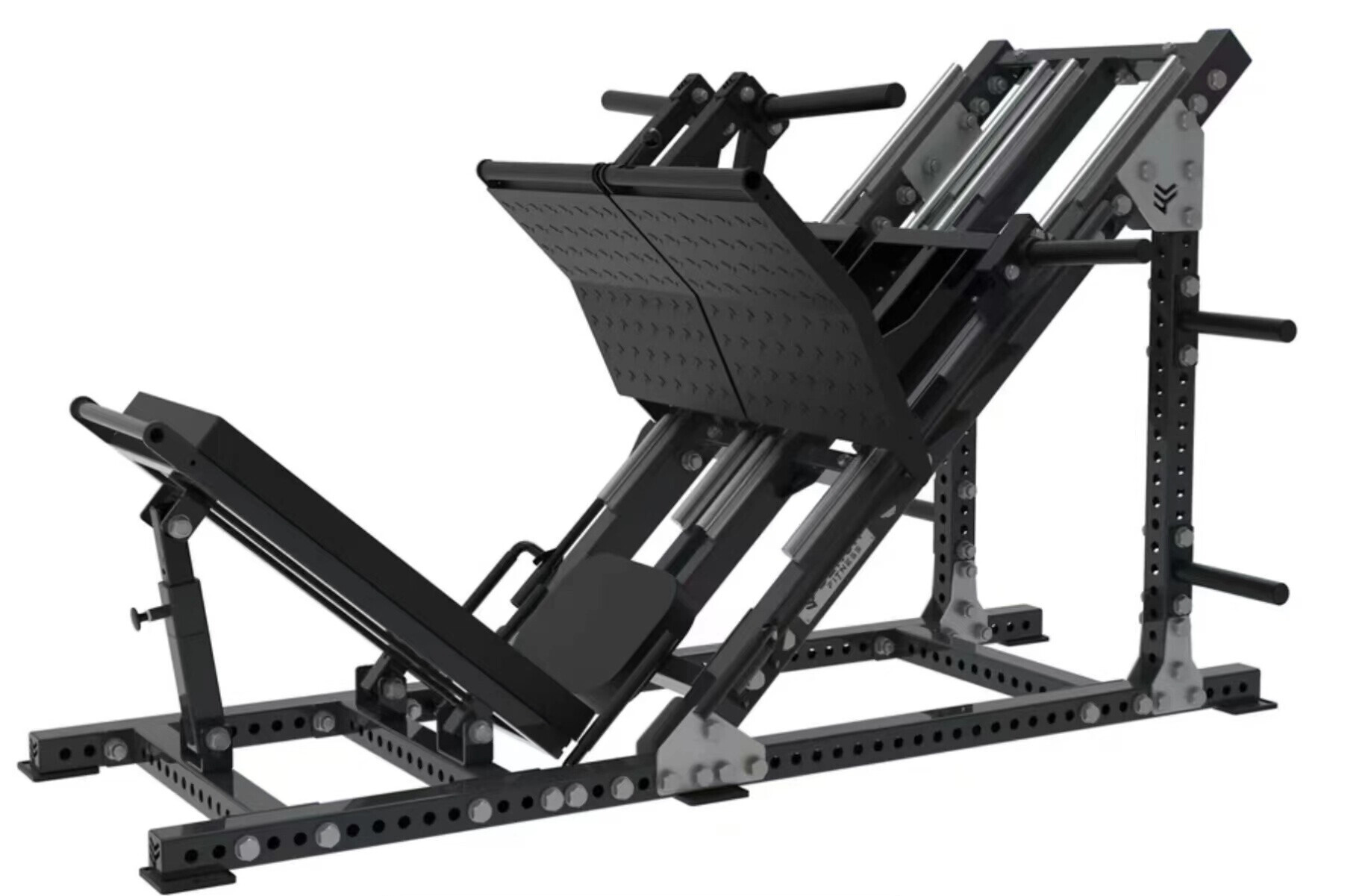
If you're serious about building explosive quad strength, choosing the right machine matters—especially when comparing the hack squat vs leg press. While both target the quadriceps, the hack squat for leg strength delivers superior muscle activation through a more natural, compound movement pattern and greater range of motion. Designed for functional strength and joint-friendly loading, modern hack squat machines (like those precision-engineered in our full-process strength equipment manufacturing line) offer unmatched stability, adjustability, and biomechanical efficiency. In this deep dive, we’ll break down EMG data, joint stress profiles, and real-world performance to help you decide which machine truly earns its place in your lower-body routine.
How Muscle Activation Differs Between Hack Squat and Leg Press
Electromyography (EMG) studies consistently show that the hack squat produces 18–22% higher peak quadriceps activation compared to horizontal leg press variations — especially during the concentric phase from 90° to 30° knee flexion. This is due to its upright torso angle (typically 45°–75°), which maintains lumbar neutrality while allowing deeper hip-knee-ankle coordination.
The leg press, by contrast, places users in a reclined position (often 40°–60° backrest incline), reducing core engagement and shifting load emphasis toward the glutes and adductors — particularly with wide-foot placement. EMG readings for vastus medialis and rectus femoris drop by an average of 14% under identical resistance loads.
Full-process manufacturing enables precise cam geometry tuning in hack squat frames — ensuring consistent resistance curves across 120–160mm stroke lengths. This eliminates the “dead spot” common in budget leg press units where mechanical advantage shifts abruptly at mid-range.
Key Biomechanical Differences
- Torque distribution: Hack squat applies 32% more anterior knee torque at 60° flexion — ideal for quad hypertrophy but requiring controlled descent speed (recommended: 3–4 sec eccentric).
- ROM utilization: Standard hack squat machines support 105–125° knee flexion depth; most commercial leg presses cap at 95–100° due to seat-back clearance limits.
- Stabilization demand: Hack squat requires active scapular retraction and pelvic control — engaging transverse abdominis at 65–70% MVC (max voluntary contraction), versus 35–40% on leg press.
Which Machine Delivers Better Strength Transfer to Real-World Movement?
Strength transfer isn’t just about muscle size — it’s about neural efficiency, joint resilience, and motor pattern carryover. Hack squat’s semi-orthogonal stance (feet shoulder-width, toes slightly out) mirrors the squatting mechanics used in Olympic weightlifting, powerlifting, and functional training. Studies tracking 12-week strength gains show athletes using hack squats improved parallel barbell squat 1RM by 11.3% on average — versus 7.1% for leg press cohorts.
Leg press excels in isolated volume accumulation for rehab or early-stage conditioning — especially for users managing acute low-back discomfort. Its fixed path reduces spinal compressive load to<1.8x bodyweight at max effort (vs. 2.4x on hack squat), making it suitable for post-injury reconditioning protocols lasting 4–6 weeks.
Our strength equipment manufacturing line integrates dual-load-path engineering: hack squat carriages use dual linear bearings with ±0.15mm runout tolerance, while leg press sleds feature self-aligning polymer bushings rated for 150,000+ cycles. Both meet ISO 20957-1:2023 Class H (heavy-duty commercial) durability standards.
Comparing Key Performance Metrics: Hack Squat vs Leg Press
Below is a direct comparison of six critical parameters influencing quad development, safety, and long-term equipment ROI for gyms and training facilities.
The table confirms why elite strength programs prioritize hack squat for primary quad development: deeper ROM, higher neural drive, and stronger carryover to free-weight lifts. However, leg press remains indispensable for high-volume accessory work — especially when paired with functional tools like the Pilates Ladder Barrel, which supports integrated mobility drills pre- and post-leg session.
What Should You Prioritize When Procuring Either Machine?
Procurement decisions must balance biomechanical intent, facility throughput, and service lifecycle. For commercial gyms averaging 8–12 daily users per unit, hack squat machines require quarterly bearing inspection and annual cam-lubrication cycles — whereas leg press maintenance intervals extend to 6 months due to simpler linkage design.
Our full-process manufacturing includes ISO 9001-certified weld inspection (100% UT-tested joints), powder-coated steel frames (thickness: 3.0–4.5mm), and user-adjustable footplate angles (±15°). All units ship with 3-year structural warranty and optional extended service plans covering 72-hour on-site response for critical failures.
When evaluating suppliers, verify these five procurement checkpoints: (1) Frame deflection testing reports (<2.5mm under 300kg static load), (2) Bearing grade certification (ABEC-7 or higher), (3) Footplate grip coefficient (≥0.72 per ASTM F2948), (4) Weight stack tolerance (±1.2%), and (5) Assembly time requirement (<90 minutes with two technicians).
Why Choose Our Strength Equipment Manufacturing Line?
We engineer strength equipment — including hack squat and leg press systems — from raw material sourcing through final QA. Every unit undergoes 72-hour endurance validation (simulating 18 months of commercial use), laser-aligned rail calibration, and independent third-party load-cell verification. Clients receive full technical documentation, CAD files for integration planning, and dedicated support for installation, staff training, and preventive maintenance scheduling.
Ready to specify the optimal configuration for your space? Contact us to discuss weight stack capacity options (200–600lb ranges), custom upholstery colors, ADA-compliant entry heights (≤120mm step-up), or integration with digital coaching platforms. We’ll provide detailed dimensioned drawings, lead times (standard: 6–8 weeks), and compliance documentation for local regulatory review — all within 48 business hours of inquiry.
Please give us a message